 Reviews

 Proudly American

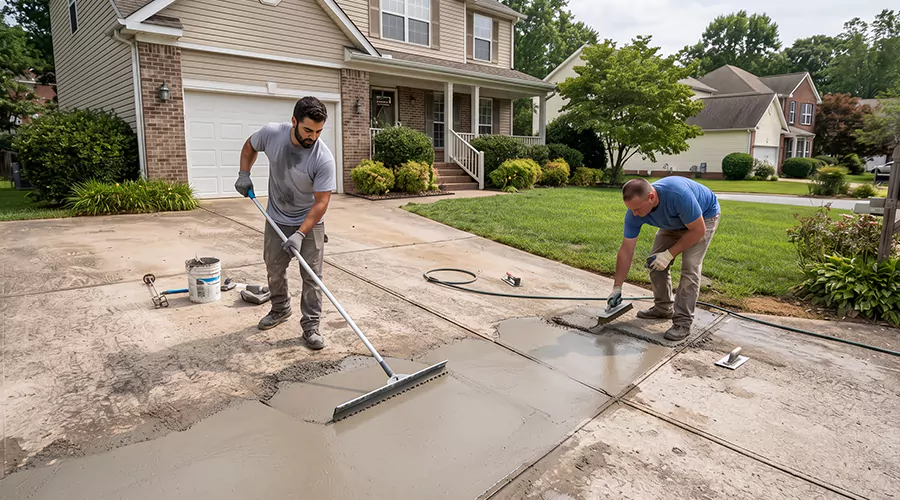
Concrete resurfacing lasts about 5 to 12 years on average, with well-maintained surfaces sometimes reaching 15 years or more. Fire and water restoration may be needed when concrete has been affected by fire, smoke, or water damage. Lifespan depends on the condition of the original slab and the quality of surface preparation. Traffic and weather exposure also affect how quickly the overlay wears.
A resurfaced patio may last longer than a busy driveway because it carries less weight. The surface can also fail early when an overlay is placed over moving cracks or unstable concrete.
What is the Average Lifespan of Resurfaced Concrete?
Most resurfaced concrete lasts around eight years under normal residential conditions. A well-prepared slab can reach 10 to 15 years when the overlay bonds correctly and receives routine care. Poor preparation can shorten that life to only a few years.
| Condition | Typical Lifespan |
|---|---|
| Poor preparation or unstable slab | 1 to 3 years |
| Average residential resurfacing | 5 to 12 years |
| Good preparation with maintenance | 10 to 15+ years |
These ranges describe the resurfacing layer rather than the original slab. The underlying concrete may remain usable for much longer.
What Makes Concrete Resurfacing Last Longer?
Long service life starts before the resurfacing material is applied. The existing concrete must be stable and properly prepared so the new layer can bond. Dirt or weak surface material can lead to peeling.
The biggest longevity factors include:
- A structurally sound slab
- Proper surface preparation
- Repair of stable cracks
- Correct curing
- Protection from heavy impact
- Periodic resealing
Concrete patio resurfacing often performs well because patios usually receive lighter loads than driveways. Drainage and slab condition still matter.
What Causes Resurfaced Concrete to Fail Early?
Premature failure usually begins with a problem in the original slab or the bond between the slab and overlay. Resurfacing cannot stop active settlement. It also cannot add structural strength to badly damaged concrete.
Common causes include:
- Active cracks continue moving.
- The slab settles after resurfacing.
- Surface preparation was incomplete.
- Water gets beneath the overlay.
- Heavy traffic wears the finish.
- Freeze-thaw cycles stress the surface.
- Deicing chemicals increase deterioration.
- The sealer wears away.
A decorative overlay can hide minor cosmetic defects. It should not be used to cover serious movement or sinking.
How Often Should Resurfaced Concrete Be Resealed?
Resurfaced concrete should generally be resealed every 2 to 5 years. Surfaces exposed to heavy traffic or harsh weather may need attention closer to the short end of that range. Light-use areas in mild conditions may go longer.
Signs that resealing may be due include:
- Water stops beading.
- Color begins fading.
- The finish looks dull.
- Worn patches appear.
- Stains become harder to clean.
Resealing protects the finish from moisture and wear. It cannot repair structural movement underneath.
How Does Resurfacing Compare With Replacement?
Resurfacing makes sense when the existing concrete remains structurally sound. Replacement is more appropriate when the slab has major settlement or widespread structural cracking. The choice affects lifespan and concrete resurfacing cost.
| Slab Condition | Better Option |
|---|---|
| Surface discoloration | Resurface |
| Light scaling | Resurface |
| Fine stable cracks | Repair then resurface |
| Major settlement | Replace |
| Large moving cracks | Replace |
Current 2026 pricing commonly places basic resurfacing near $3 to $5 per square foot. Replacement generally costs more because the old slab must be removed before new concrete is installed.
What Warning Signs Mean Resurfacing Is Wearing Out?
A resurfaced surface is nearing repair time when the protective finish begins breaking down or the overlay loses its bond. Small cosmetic changes do not always mean complete failure. Widespread lifting or repeated cracking deserves more attention.
Watch for these signs:
- The overlay begins flaking.
- Edges start lifting.
- Bubbles form beneath the finish.
- Cracks reopen after repair.
- Water penetrates worn areas.
- Color loss becomes widespread.
- Rough patches develop.
- Sections sound hollow when tapped.
Concrete restoration may involve localized repair when failure is limited. Large areas of debonding can make full resurfacing or replacement more practical.
What Can You Check Yourself?
A simple visual check can help you track the condition of a resurfaced slab. Walk the surface after it is clean and dry. Look for areas where the finish has separated or where cracks have changed.
Use this routine:
- Photograph visible cracks.
- Mark their ends with removable tape.
- Check them again after several months.
- Look for vertical movement.
- Note any spreading or lifting.
A crack that grows or develops height differences can indicate movement below the overlay.
When Should You Call a Professional?
Professional assessment is appropriate when the resurfaced layer is lifting across a large area or the slab underneath appears to be moving. It is also useful when cracks continue returning after repair because another overlay may fail for the same reason.
Consider help when:
- Large areas are peeling.
- Cracks show vertical displacement.
- Sections of the slab are sinking.
- Water repeatedly collects in low areas.
- Several previous repairs have failed.
Patio restoration can often stay limited when the underlying slab remains stable.
How Can You Extend the Life of Resurfaced Concrete?
Routine maintenance can help a sound resurfaced surface reach the longer end of its expected lifespan. Cleaning removes materials that can wear the finish. Resealing restores the protective barrier before the overlay becomes exposed.
Use this schedule:
- Sweep debris as needed.
- Wash when dirt builds up.
- Inspect cracks twice a year.
- Repair stable defects promptly.
- Reseal every 2 to 5 years.
- Avoid harsh deicing products when possible.
Good drainage also matters because standing water can increase moisture exposure around cracks.
Conclusion
Concrete resurfacing usually lasts 5 to 12 years, while good preparation and regular care can extend service life beyond 15 years. The original slab must remain stable because an overlay cannot correct settlement or serious structural cracking. Inspect the surface twice a year and reseal it every 2 to 5 years. If cracks keep moving, assess the slab before applying another overlay.
Frequently Asked Questions
Can concrete resurfacing last 20 years?
It can under favorable conditions, but 5 to 12 years is a more typical planning range. Good preparation and maintenance can extend the lifespan.
Does resurfacing last longer on patios than driveways?
Often, yes. Patios usually receive less weight and abrasion than vehicle areas.
Does resurfacing fix cracks permanently?
No. Stable cracks can be repaired first, but active structural cracks can return through the new layer.
Can resurfaced concrete be resurfaced again?
Sometimes. The existing overlay and original slab must be stable enough to support another treatment.
Is resurfacing worth it for old concrete?
Age alone does not decide the answer. Resurfacing can work well when the slab remains structurally sound.